
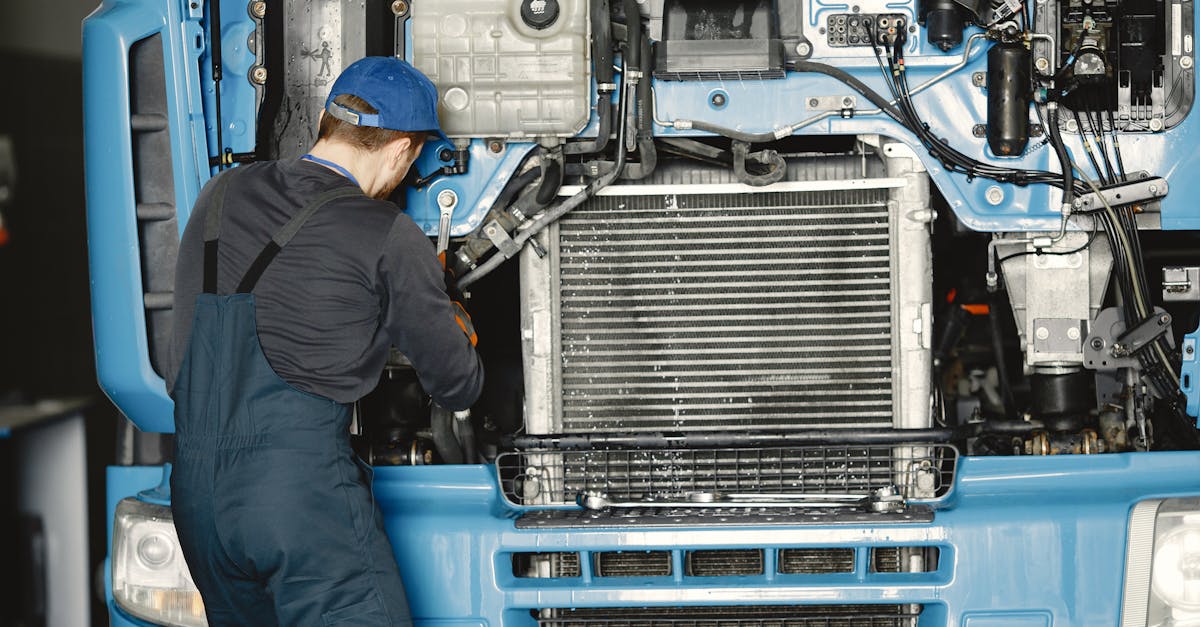
A jake brake is an engine compression brake that slows a diesel truck by releasing cylinder pressure through the exhaust valves instead of firing it back into the piston. It's named for Jacobs Vehicle Systems, the company that patented the design in the 1960s, and it's standard equipment on most Class 8 trucks today.
If you've ever heard a truck downshift on a grade and make that sharp, machine-gun rattle, that's a jake brake at work. This guide covers how it actually works inside the cylinder, how it differs from an exhaust brake, when to use it and when not to, and what to check when one starts acting up or making the wrong kind of noise.
What Is a Jake Brake and How Does It Work?
A diesel engine has no throttle plate and no spark plug — it compresses air until it's hot enough to ignite injected fuel. That's the same compression-ignition process covered in How Do Diesel Engines Work? A Plain-English Breakdown, and it's also why a jake brake works differently than anything on a gas engine.
Under normal power, the piston compresses air, fuel ignites, and the expanding gas pushes the piston back down. That's the power stroke. On a jake brake, a hydraulic system opens the exhaust valve right at the top of the compression stroke — before fuel would normally fire.
The compressed air vents out through the exhaust valve instead of pushing the piston down. So instead of getting a power stroke, the engine just spent energy compressing air it then threw away. Multiply that across six cylinders at highway RPM and you get real, usable braking force.
- No fuel is burned during jake braking — the ECM cuts injection on the engaged cylinders
- The engine effectively becomes an air compressor, absorbing the truck's momentum
- Braking force scales with RPM — the higher the revs, the stronger the retarding effect
- It works through the engine's own valve train, so no separate housing bolts to the exhaust like some retarders
Since a jake brake needs oil pressure to trigger the hydraulic actuators on the rocker assembly, engine oil condition matters more than most owners realize. Sludge or low oil pressure can cause weak or inconsistent braking — one more reason to stay on the interval covered in Oil Change on a Diesel Engine: Types, Intervals and Why It Matters.
Jake Brake vs. Exhaust Brake vs. Transmission Retarder — What's the Difference?
These three systems all slow a truck without the wheel brakes, but they work in completely different places.
| System | How It Slows the Truck | Typical Noise |
|---|---|---|
| Jake brake (compression brake) | Opens exhaust valves during compression to release cylinder pressure | Sharp, popping rattle |
| Exhaust brake | A valve in the exhaust pipe restricts flow, building backpressure against the pistons | Quieter, more of a low hum or hiss |
| Transmission (driveline) retarder | A hydraulic or electromagnetic unit in or after the transmission resists shaft rotation | Nearly silent |
Some trucks run more than one at once — an exhaust brake paired with the jake brake for extra hold on steep grades. Both systems are separate from the emissions equipment discussed in What Is a Particulate Trap? Diesel Emissions Filter Explained, though a failing DPF or EGR valve can sometimes throw off exhaust backpressure readings and make an exhaust brake feel weaker than normal.
Why Are Jake Brakes So Loud?
The sharp crackle comes from unburned compressed air venting suddenly through the exhaust valves, cylinder after cylinder, with no muffler-friendly exhaust pulse to smooth it out. A straight-piped or poorly muffled truck amplifies that sound significantly.
That noise is exactly why you see \"No Engine Brake\" or \"No Jake Brake\" signs near towns and residential areas. These are local noise ordinances, not a federal rule — cities and counties set their own limits under local nuisance or noise codes, and enforcement varies by jurisdiction.
Warning: Ignoring a posted no-jake-brake zone can bring a citation in many towns, separate from any state emissions or equipment rule. If you run routes through unfamiliar areas, check local signage — state-level diesel rules are covered generally in Diesel Emissions Rules by State: What Pickup, RV and Fleet Owners Need to Know, but noise ordinances are set town by town. Rules change — verify your current local requirements.
How to Use a Jake Brake Correctly
Most trucks have a dash switch with two or three settings, letting the driver choose how many cylinders engage. Here's the basic approach:
- Select a lower setting (one or two cylinders) for light traffic slowdowns or gentle grades
- Switch to full power (all cylinders) for steep downgrades where you need maximum retarding force
- Downshift before you need heavy braking — the jake brake works best at higher RPM, typically 1,200-2,100 RPM depending on the engine
- Keep your foot off the throttle — most systems automatically disengage the jake brake the instant the accelerator is touched
Using the jake brake on long descents also spares the service brakes from overheating and fading, which is a real safety benefit on mountain grades. It's part of why fleets push drivers to use it correctly rather than ride the pedal down a 6% grade.
When Shouldn't You Use Engine Braking?
Compression braking applies force through the drive axle, not independently to each wheel like the service brakes do. On slick surfaces that can cause a skid.
- Wet, icy, or snow-covered roads — sudden retarding force on low-traction surfaces can break the rear wheels loose
- Loaded trailers on uneven surfaces — abrupt engine braking can cause trailer sway
- Posted no-jake-brake zones — even if traction is fine, local ordinance still applies
Most drivers back off the jake brake setting or switch it off entirely in bad weather and rely on steady, lower-gear driving plus light service brake pressure instead.
Jake Brake Not Working? Common Symptoms, Causes and Fixes
A jake brake that's weak, silent, or making a new noise usually points to one of a handful of issues. Here's how a shop typically works through it:
Symptom: No Braking Effect at All
A shop starts by scanning for fault codes tied to the jake brake solenoids — most modern systems are ECM-controlled and will log a circuit fault if a solenoid isn't actuating. If codes are clean, the next step is checking oil pressure at the jake brake housing, since low pressure means the hydraulic actuators can't push the exhaust valves open.
Symptom: Weak or Inconsistent Braking
This often traces back to worn valve lash adjustment or a sticking solenoid. A shop will check valve lash against OEM spec and inspect the slave piston and master piston in the housing for wear or debris. Sludged oil from extended change intervals is a common contributor here.
Symptom: New Knocking or Rattling Noise
A different, harsher knock (not the normal jake brake crackle) can mean a worn rocker arm, a loose housing bolt, or valve train damage. A shop pulls the valve cover and does a visual and lash check before assuming it's the jake brake itself and not a separate valve train problem.
| Repair | Typical Cost Range |
|---|---|
| Solenoid replacement (per cylinder pair) | $150–$400 |
| Valve lash adjustment / housing service | $300–$700 |
| Full Jacobs brake housing/actuator replacement | $1,500–$3,000 per bank, platform dependent |
Prices as of 2026, verify locally — costs vary by engine platform (Cummins, Detroit, Paccar, Caterpillar) and shop labor rates. For platform-specific quirks, see Diesel Engine Families Explained: Power Stroke, Cummins & 3.0 Duramax.
As a rule of thumb: if the switch does nothing and there's no sound change at all, start with a scan tool check for solenoid codes. If the brake works but sounds different or weaker than before, book a shop diagnosis for a valve lash and oil pressure check before it turns into a bigger valve train repair. Find a diesel shop near you if you're hearing anything off.
Do Jake Brakes Damage the Engine?
A properly functioning, correctly adjusted jake brake doesn't damage the engine — it's engineered to handle the loads of routine compression braking over the life of the truck. Problems come from neglect, not the system itself.
Out-of-spec valve lash, worn rocker components, or using the jake brake at RPMs outside the OEM recommended range can accelerate valve train wear over time. Following the OEM service interval for valve adjustment and staying current on oil changes keeps the system working as designed for the truck's full service life.
Frequently Asked Questions
Need a Diesel Mechanic?
Tell us what's wrong and we'll match you with local shops that can take it on.
Find a Diesel Repair Shop Near You

Discussion (0)
Be the first to comment!
Share your experience or ask a question about diesel repair.