
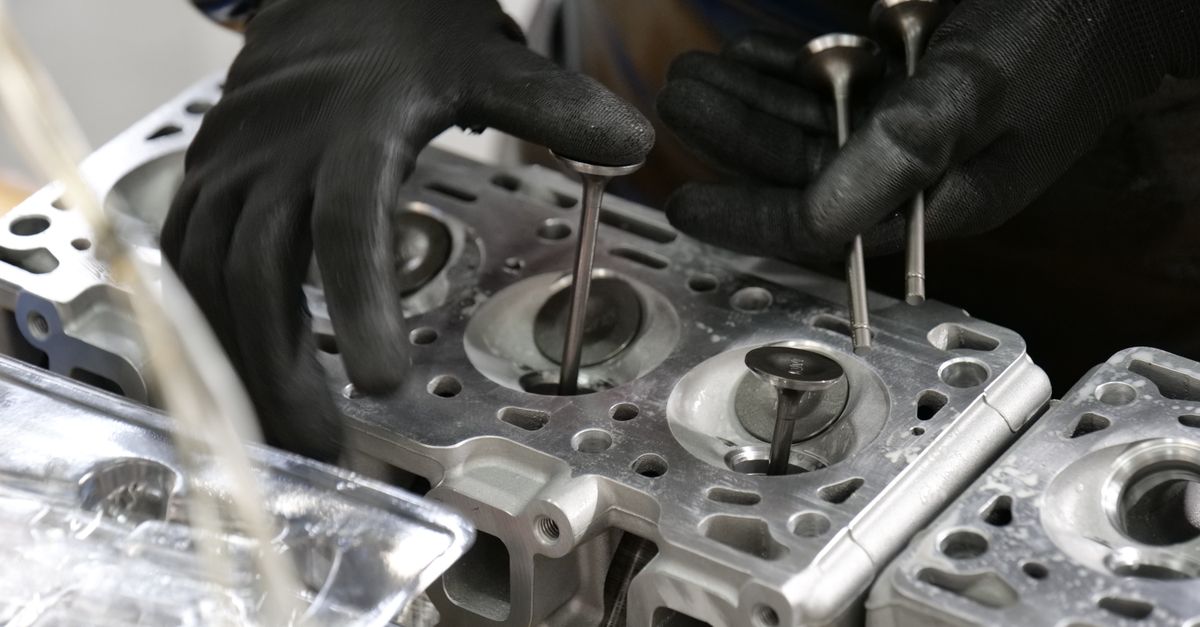
An EGR valve replacement on a diesel usually costs $400 to $1,800 including parts and labor. The low end covers a basic pickup truck valve swap; the high end covers heavy-duty platforms or jobs where the EGR cooler fails alongside it. Carbon buildup, not full valve failure, causes most of these repairs.
If your truck is throwing a reduced-power code, running rough at idle, or failing a smog or opacity check, the EGR system is often the first place a shop looks. This guide breaks down what you'll actually pay by platform, what drives the cost up, and when cleaning beats replacing.
What Does an EGR Valve Replacement Cost by Platform?
Price depends heavily on which engine you're running. Light-duty pickups are cheaper and faster to service than medium- and heavy-duty trucks, where the EGR valve sits buried under more hardware.
| Platform | Parts Cost | Labor | Total (Installed) |
|---|---|---|---|
| Light-duty pickup (6.7L Cummins, Power Stroke, Duramax) | $150-$450 | $150-$350 | $400-$800 |
| Medium-duty (Class 6-7) | $250-$600 | $250-$450 | $600-$1,100 |
| Heavy-duty Class 8 (Cummins, Detroit, PACCAR, Volvo, Mack) | $400-$900 | $350-$700 | $800-$1,600 |
| EGR cooler replaced same job (any platform) | +$500-$1,500 | +$300-$600 | $1,200-$3,000+ |
Prices as of 2026; verify locally. Dealer labor rates run higher than independent diesel shops, sometimes by $40-$60 per hour, which adds up fast on jobs that take three to six hours.
Worked Example: 2017 Ram 2500, 6.7L Cummins
Here's what an itemized invoice looks like for a common case — P0401 (insufficient EGR flow) with a sticking valve and a cooler that still tests clean:
| Line Item | Cost |
|---|---|
| Diagnostic fee (scan, live data, smoke test) | $120 |
| EGR valve, OEM | $320 |
| Gaskets and coolant top-off | $35 |
| Labor (3.5 hrs at $140/hr, independent shop) | $490 |
| Total | $965 |
Had the cooler also needed replacement — typically confirmed by a pressure test showing coolant loss into the exhaust side — add roughly $500-$1,200 more in parts and another 1.5-2.5 hours of labor, since the intake manifold usually has to come off to access it.
Why Does the Cost Range So Much?
A few factors swing the price more than anything else:
- Access and labor time. Some EGR valves sit right on top of the engine; others require removing the intake manifold, turbo plumbing, or even the cab on certain medium-duty trucks.
- Cooler condition. The EGR cooler and valve work together, and a clogged or cracked cooler often fails around the same time. Replacing both at once adds parts cost but saves a second labor bill later.
- OEM vs. aftermarket parts. Aftermarket EGR valves can run 30-40% less than OEM, but quality varies. Ask your shop which brand they're installing and why.
- New vs. remanufactured. A reman valve can save $100-$300 over new with a similar warranty, especially on older platforms where OEM supply is tight.
For background on how this valve works and why carbon buildup is so common, see The Diesel EGR Valve: What It Does and Why It Fails.
What Does a Shop Actually Check First?
Before anyone quotes a valve replacement, a competent diesel tech runs through a short sequence to confirm the EGR system — and not something upstream of it — is the actual problem:
- Pull the full code list, not just the first one. P0401 (insufficient flow), P0402 (excessive flow), P0404/P0405 (position/sensor range), and P2459 (EGR cooler performance) each point to a different failure mode. A shop that replaces the valve for every EGR code without reading which one fired is guessing.
- Watch live data during a commanded sweep. The tech commands the valve from 0% to 100% on the scan tool and watches whether the actual position reported matches the commanded position in real time. A lag or a position that never reaches commanded tells them whether it's carbon drag or a dead actuator.
- Check EGR cooler differential temperature. If the cooler isn't pulling exhaust gas temps down as much as it should, that's a flow or cooler efficiency problem, not necessarily the valve itself.
- Pressure-test the cooling system. This catches internal cooler leaks — exhaust gas or coolant crossing where it shouldn't — before anyone pays for a valve that was never the real issue.
- Inspect the intake manifold and charge air cooler. Heavy carbon packing downstream of the valve can mimic a flow code even with a perfectly good EGR valve, especially on trucks with 150,000+ miles and a lot of idle time.
Decision Framework: Clean, Replace, or Replace the Cooler Too?
Clean the valve if: the code points to slow response or position error, the actuator sweep test shows the valve eventually reaches commanded position just slower than spec, and the cooler's temperature differential and pressure test both come back normal. This is the cheapest fix and the right first move on a truck under 150,000 miles with no coolant loss.
Replace the valve only if: the actuator sweep shows no movement or erratic movement with no mechanical obstruction found on teardown, or the valve body itself is cracked or warped. Cleaning a dead actuator doesn't bring it back — it needs a new part.
Replace the valve and cooler together if: the pressure test shows coolant intrusion into the exhaust side, you're seeing unexplained coolant loss with no visible external leak, white smoke under load, or a P2459 cooler-performance code alongside the flow code. Doing both in one labor job is almost always cheaper than paying for teardown twice within a year.
Hold off and monitor if: the code is intermittent, hasn't recurred after a drive cycle, and there's no drivability complaint. Diesel EGR codes can trip from a single stuck-open moment during a cold start and clear on their own; a shop should confirm the code is active and repeating before recommending teardown.
State Emissions Requirements and the EGR System
Because the EGR valve is a federally regulated emissions component, most states that run an OBD-based inspection program will fail a vehicle outright if the EGR system's readiness monitor hasn't completed or if an active EGR-related code is stored, regardless of how the truck drives. States that still require an opacity or tailpipe test for older diesels will often flag high idle smoke that traces back to a stuck-open EGR valve dumping excess exhaust gas into the intake. Tampering with or removing EGR hardware — a "delete" — violates the federal Clean Air Act's anti-tampering provisions for any vehicle driven on public roads, and in states with OBD inspection programs, a deleted EGR system is typically caught immediately because the related monitors will never set as ready. If your truck is registered for road use, budget for the repair rather than the delete; it's the option that doesn't put your registration renewal at risk.
What Are the Signs Your EGR Valve Is Failing?
Catching EGR problems early keeps the repair cheaper and protects the rest of the emissions system. Watch for:
- Rough or unstable idle, especially right after startup
- A check engine light with codes tied to EGR flow, position, or temperature sensors
- Reduced power or a derate triggered by the ECM protecting itself from an emissions fault it can't resolve
- A noticeable drop in fuel economy, since the engine compensates for incorrect exhaust gas recirculation by adjusting fueling
- Slowly dropping coolant level with no visible external leak, which often points to a cracked EGR cooler rather than the valve itself
- A faint exhaust smell inside the cab, caused by exhaust gas leaking past a stuck or cracked valve housing
- Failing a state opacity or OBD-based emissions inspection even though the truck seems to run fine day to day
Frequently Asked Questions
Need a Diesel Mechanic?
Tell us what's wrong and we'll match you with local shops that can take it on.
Find a diesel shop near you

Discussion (0)
Be the first to comment!
Share your experience or ask a question about diesel repair.