
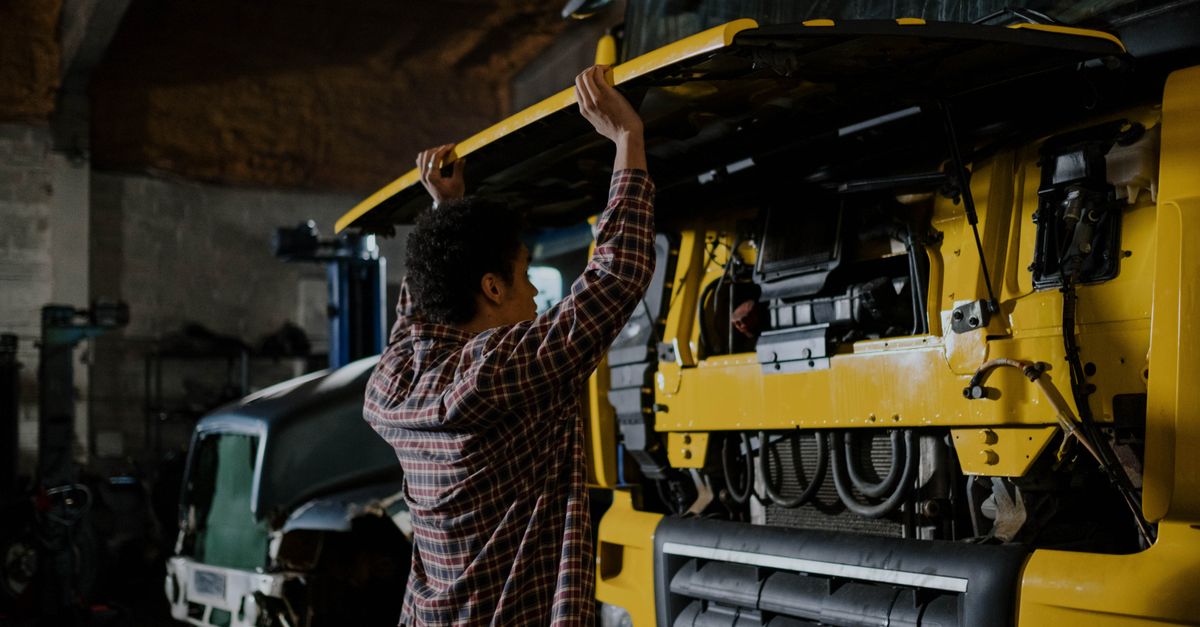
A fleet diesel repair shop that actually works for you combines three things: trained techs who can diagnose fast, honest communication about downtime, and records that hold up to an FMCSA audit. Most fleet managers pick a shop on price or proximity first, then regret it the first time a truck sits for a week waiting on a part that should've been on the shelf.
Choosing right matters more for a fleet than for a single owner-operator. One bad shop relationship can cascade into missed deliveries, blown PM schedules, and trucks that keep coming back for the same fault code. This guide covers what to check before you sign a service agreement — and what to watch for once you're in one.
What Makes a Fleet Diesel Repair Shop Different From a General Repair Shop?
A shop built for fleets runs differently than one built for weekend RV owners or single pickup trucks. It needs bay capacity for multiple units at once, technicians cross-trained on several engine platforms, and a parts relationship that doesn't rely on next-day shipping for every job.
Ask whether the shop services your specific platforms — Cummins, Detroit, Paccar, Volvo, Cat — at volume, not just occasionally. A shop that sees your engine family daily diagnoses faster than one seeing it twice a year.
- Multiple lifts or bays rated for your GVWR class
- Techs certified on your specific OEM platforms, not just general diesel
- In-house diagnostic tools that read your truck's full fault history, not just a generic code reader
- Parts inventory or same-day sourcing for common failure items (filters, injectors, turbos, DEF components)
Does the Shop Carry the Right Certifications and Warranty Coverage?
ASE Master Technician certification is a baseline, not a bonus. Beyond that, ask if techs hold OEM-specific training — Cummins QuickServe, Detroit DDC-certified, or Paccar PX training — for the engines in your fleet.
Warranty handling matters too. If a shop isn't an authorized warranty repair center for your engine brand, you could end up paying out of pocket for work that should've been covered. Confirm this before your next scheduled PM, not after a $6,000 injector job.
How Fast Can the Shop Turn Your Truck Around?
Turnaround time is the single biggest cost driver in fleet repair, bigger than the invoice total. A shop quoting same-day diagnosis on a fault code and a realistic parts ETA beats a cheaper shop that leaves your truck guessing for three days.
Ask directly: what's the average diagnostic turnaround for a no-start call, how many hours does a routine PM take with your bay schedule, and what's the shop's actual fill rate on common parts — meaning how often do they have the part on the shelf versus ordering it after the truck is already on the lift? A shop that hedges on these numbers or quotes "it depends" without a range hasn't tracked its own performance, which usually means it isn't being held to one internally either.
Get a benchmark in writing before you commit:
- Fault code diagnosis: 1–3 hours if the shop has OEM-level diagnostic software for your platform; half a day or more if they're running a generic reader and calling the dealer for code interpretation
- Routine PM (oil, filters, DPF inspection, brake check): 2–4 hours per unit with a dedicated bay
- DPF/DEF system fault requiring forced regen: 1–2 hours of shop time, assuming the truck isn't also down for a sensor replacement
- Injector or turbo replacement: same-day if the part is in stock, 2–5 days if it has to be sourced from a regional distribution center
What a Shop Checks First on a No-Start Call
A competent fleet shop doesn't start pulling the fuel system apart on a no-start. The diagnostic sequence is fairly standardized across platforms, and a shop that skips steps to "get to the expensive part" is usually padding the invoice.
- Battery and starting circuit first. Voltage at the batteries, voltage drop across the starter cable and ground, and starter current draw. A weak battery or corroded ground is the cause of a no-start far more often than fuel or injection problems, and it's the fastest thing to rule out.
- Fuel delivery and air intake. Fuel pressure at the rail, water-in-fuel sensor status, and whether the air intake restriction is within spec. A clogged fuel filter or a tripped water-in-fuel sensor will shut an engine down and mimic a much more serious fault.
- Fault code history, not just active codes. A tech pulling only active codes misses the stored codes that show what happened in the minutes before the shutdown — critical for intermittent faults that don't reproduce on the lift.
- ECM and sensor wiring at the harness connectors. Corrosion and chafed wiring account for a disproportionate share of "no-start, no codes" calls, especially on trucks that run regional routes with road salt exposure.
If a shop quotes a full injector or turbo teardown before completing this sequence, ask why. There are legitimate cases where a known fault history justifies skipping ahead, but it should be explained, not assumed.
Forced Regen vs. Passive Regen: Why the Difference Matters for Downtime
Fleet managers get billed for "DPF regen service" without always knowing what that means, and it affects both cost and turnaround. A passive regen happens automatically while the truck is driving at highway speed and load — exhaust temperatures get high enough to burn off soot in the DPF without any driver or shop intervention. It costs nothing and requires no shop time.
A forced (parked) regen is initiated manually, either by the driver through the dash controls or by a technician using diagnostic software, when soot loading has climbed high enough that passive regen isn't keeping up — usually signaled by a dash warning or a derate. The truck sits stationary, typically for 20–45 minutes, while the ECM commands extra fuel injection to raise exhaust temperature and burn the DPF clean. This is shop time that should be billed as such, but it's a fraction of the cost of a DPF removal and cleaning, which runs $800–$1,500 depending on whether the filter is salvageable or needs replacement.
The decision point for a fleet manager: if a truck is throwing a DPF soot-load warning, a forced regen on the lot is the cheap, fast fix. If the truck has already derated or thrown a restriction code after a forced regen was attempted, the filter itself likely needs removal and cleaning or replacement — don't let a shop run repeated forced regens as a stall tactic instead of diagnosing why passive regen isn't happening in normal operation (often a route-and-idle-time problem, not a parts problem).
A Decision Framework: In-House Shop, Independent Shop, or Dealer Network?
There's no universal right answer here — it depends on fleet size and route profile.
- Run an in-house shop if you're operating 25+ trucks on a hub-and-spoke model where units return to the same yard nightly. The fixed cost of bays, lifts, and a diagnostic tech only pays off with volume and proximity.
- Use a dedicated independent fleet shop if you're running 5–25 trucks, need OEM-level diagnostics without OEM-level markup, and can tolerate scheduling around their bay availability rather than yours.
- Use a dealer network if your trucks are still under OEM powertrain warranty, since warranty claims processed outside the dealer network often get delayed or disputed, and the paperwork trail matters more than the hourly rate.
- Use a national over-the-road repair network if your routes are long-haul and trucks break down outside your home region — proximity trumps relationship in that scenario, and having a pre-negotiated rate with a national chain avoids getting quoted retail at an unfamiliar shop 400 miles from home.
What FMCSA and State Inspection Records the Shop Needs to Keep
Under FMCSA regulation 396.3, motor carriers are required to keep maintenance records for each vehicle for as long as it's in service plus six months after it leaves the fleet, including inspection, repair, and maintenance records with dates and descriptions of work performed. If your repair shop isn't generating documentation in that format — unit number, date, odometer, specific parts and labor, and the name of the tech who performed the work — the burden falls back on your safety department to reconstruct it during a DOT audit.
A shop that understands fleet compliance will also flag anything that affects your DVIR (Driver Vehicle Inspection Report) process, such as brake or steering repairs, and provide documentation in a format you can hand directly to a roadside inspector or auditor without reformatting it first. Ask to see a sample invoice from a past repair before you sign on — if it just says "repaired as needed" with a flat labor charge, that's a shop that isn't thinking about your audit exposure, only its own turnaround.
Need a Diesel Mechanic?
Tell us what's wrong and we'll match you with local shops that can take it on.
Find a Diesel Shop Near You


Discussion (0)
Be the first to comment!
Share your experience or ask a question about diesel repair.