
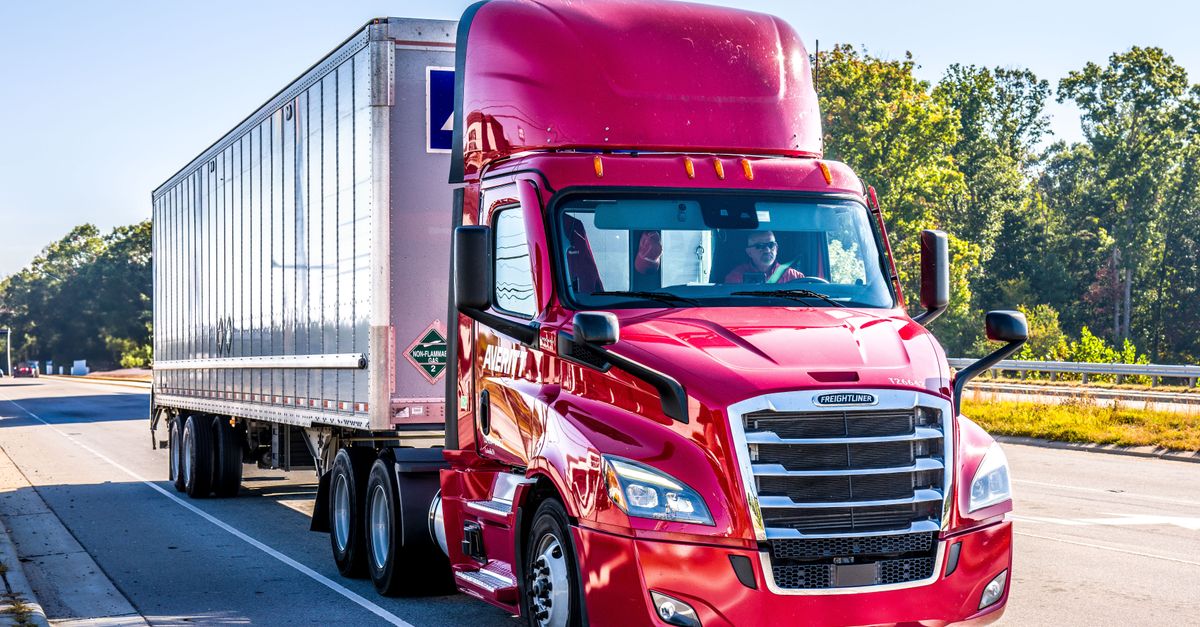
The DOT annual inspection checklist is built around FMCSA 49 CFR §396.17, the federal rule requiring every commercial motor vehicle to pass a documented inspection at least once every 12 months. The checklist covers brakes, steering, suspension, frame, fuel system, exhaust, coupling devices, lighting, tires, wheels, and windshield wipers.
Missing a single annual inspection doesn't just risk a roadside citation. It can pull a truck out of service mid-route, bust a delivery window, and flag your whole operation during a CSA audit. For a fleet manager, this checklist isn't paperwork — it's the backbone of your preventive maintenance program.
Here's what the inspection actually requires, who can sign off on it, what it costs, and how to build it into a PM schedule that keeps trucks moving instead of sitting in a bay.
What Does 49 CFR §396.17 Actually Require?
FMCSA 49 CFR §396.17 requires every power unit and trailer with a GVWR over 10,000 lbs to get a full inspection at intervals not exceeding 12 months. The rule applies to tractors, straight trucks, trailers, and buses operating in interstate commerce.
The inspection must follow the minimum standards laid out in Appendix A to Subpart B of Part 396. That appendix lists the exact components and defects inspectors check — it's the source document behind every DOT annual inspection checklist a shop or fleet uses.
You can use a prior roadside inspection to satisfy the annual requirement if it was a Level I, IV, or V inspection performed within the last 12 months and it's documented. Most fleets still schedule a dedicated annual inspection rather than banking on a roadside stop lining up.
Note that §396.17 is a federal floor, not a ceiling. Some states layer additional requirements on top of it. California, for example, requires periodic smoke opacity testing tied to its own emissions program, and several states require the annual inspection report to be retained for longer than the 14-month federal minimum if the vehicle is also subject to state inspection programs. Check your base state's motor carrier division before assuming the federal checklist is the only one that applies — it usually is, but it's worth the five-minute call.
Who Can Perform a DOT Annual Inspection?
The inspector must meet FMCSA's qualification standard under §396.19. That means they need:
- Knowledge of inspection methods, procedures, tools, and equipment
- The skill and ability to apply that knowledge
- One year of relevant training or experience, or a combination of both
A qualified inspector can be your own trained maintenance staff, a dealer, or a third-party shop. Many owner-operators and small fleets outsource it. Larger fleets with 20+ power units often train and certify in-house techs to keep inspections on a tighter rolling schedule.
Either way works under the rule — but the signed, dated report is what matters in an audit, not who holds the wrench.
Use this to decide which route fits your operation:
- Outsource to a dealer or third-party shop if you run fewer than 10 power units, don't have a dedicated maintenance bay, or your trucks are already visiting a shop regularly for warranty work — bundling the annual inspection into an existing visit usually costs less than a standalone appointment.
- Train an in-house tech if you run 15-20+ units, you're already paying for shop downtime and drive time to outside facilities, or your CSA scores are sensitive enough that you want inspection timing fully under your control rather than dependent on a third party's schedule.
- Use a mobile inspection service if your trucks are spread across multiple yards or you can't afford to pull a unit off a route to bring it to a shop — mobile techs who meet §396.19 can perform the inspection at your yard or a drop lot.
Typical costs run in a fairly narrow band:
| Provider Type | Typical Cost (Power Unit) | Typical Cost (Trailer) | Turnaround |
|---|---|---|---|
| Dealer service department | $150 - $250 | $100 - $175 | Same day, by appointment |
| Independent/third-party shop | $120 - $200 | $80 - $150 | Same day to next day |
| Mobile inspector (on-site) | $175 - $300 | $125 - $200 | Scheduled, no downtime travel |
| In-house certified tech | $40 - $70 in labor/parts | $30 - $50 in labor/parts | Same day, fleet-controlled |
Those figures cover the inspection itself, not repairs for anything that fails. A brake adjustment or a burned-out marker light adds minimal cost; a cracked frame member or an ABS fault tied to a wiring harness can run well past $500 once diagnosis and parts are factored in.
The Full DOT Annual Inspection Checklist
Here's the breakdown by system, following FMCSA's minimum inspection standards:
| System | What Gets Checked |
|---|---|
| Brake System | Service brakes, parking brake, brake drums/rotors, brake lines and hoses, low air warning device |
| Coupling Devices | Fifth wheels, pintle hooks, drawbar/towbar eye, safety devices, saddle-mounts |
| Exhaust System | Leaks, mounting, proximity to fuel system or wiring |
| Frame | Cracks, bent members, cross members |
| Fuel System | Leaks, cap security, mounting |
| Lighting | All required lamps and reflectors |
| Steering | Steering wheel free play, steering column, gear box, Pitman arm, power steering |
| Suspension | Spring assembly, axle positioning, shock absorbers, air suspension leaks |
| Tires | Tread depth, damage, inflation, mismatched sizes |
| Wheels and Rims | Cracks, missing/loose lug nuts, welds |
| Windshield Wipers | Working condition |
Trailers get a similar check — frame, brakes, coupling, lighting, tires, and wheels — minus items specific to the power unit like steering and exhaust.
A few items come up often during inspection that fleet managers should flag ahead of time. Worn brake friction material, DEF/SCR system faults, and ABS warning lamps all trip up vehicles that otherwise look road-ready. If your trucks run active DPF regens frequently, check your regen cycle history before the inspection — stored fault codes tied to emissions systems are a common reason for an unexpected fail.
The distinction between regen types matters here because it changes what an inspector finds. A passive regen happens automatically during normal highway driving when exhaust temps are already high enough to burn off soot — it generates no fault codes and requires no driver action. An active regen kicks in when the DPF hits a moderate soot load threshold; the ECM injects extra fuel to raise exhaust temp and clear the filter, usually while the truck is still in operation, and it's still routine. A forced regen is different: it only happens when soot load has climbed high enough that passive and active regens haven't kept up, and it requires a technician to manually trigger the cycle with a diagnostic tool while the truck is stationary and often at idle for 45 minutes or more. If a truck is regularly needing forced regens, that's a sign of an upstream problem — short-haul routes that never reach regen temperature, a failing DPF, or a sensor fault — and it's exactly the kind of history an inspector's code scan will surface as a stored fault, even if the dash light isn't on at the moment of inspection.
How Long Is a DOT Annual Inspection Valid?
The inspection is valid for 12 months from the date on the report. FMCSA doesn't require inspections to land on a calendar year — each vehicle runs its own 12-month clock from its last passed inspection.
That staggered timing is actually an advantage for fleet planning. Spreading inspections across the year avoids a bottleneck where half your fleet is due in the same month.
What Happens If a Vehicle Fails Inspection?
A failed item must get repaired before the vehicle returns to service. The inspector documents the defect on the report, and the shop or in-house tech must correct it and certify the repair.
Common fail points include:
- Brake stroke out of adjustment or worn below minimum lining thickness
- Cracked or leaking air lines
- Tire tread below 4/32" on steer axles or 2/32" on other positions
- Missing or illegible lighting/reflector equipment
- Cracked frame rails or loose/missing fasteners on suspension components
Whether a defect puts the vehicle fully out of service immediately or simply needs correction before the next trip depends on severity, and that's governed by the CVSA North American Standard Out-of-Service Criteria — a separate but related document from the inspection checklist itself. A cracked frame rail or brakes with less than 50% of required stroke reserve typically means the truck doesn't move until it's fixed. A single burned-out clearance light usually doesn't, though it still has to be corrected and noted. Once repairs are made, the correcting technician signs and dates the report next to the original defect, and that corrected report — not a new inspection — becomes part of the vehicle's permanent maintenance file for the next 14 months, as required for CSA audit purposes.
Need a Diesel Mechanic?
Tell us what's wrong and we'll match you with local shops that can take it on.
Find a Diesel Shop Near You


Discussion (0)
Be the first to comment!
Share your experience or ask a question about diesel repair.